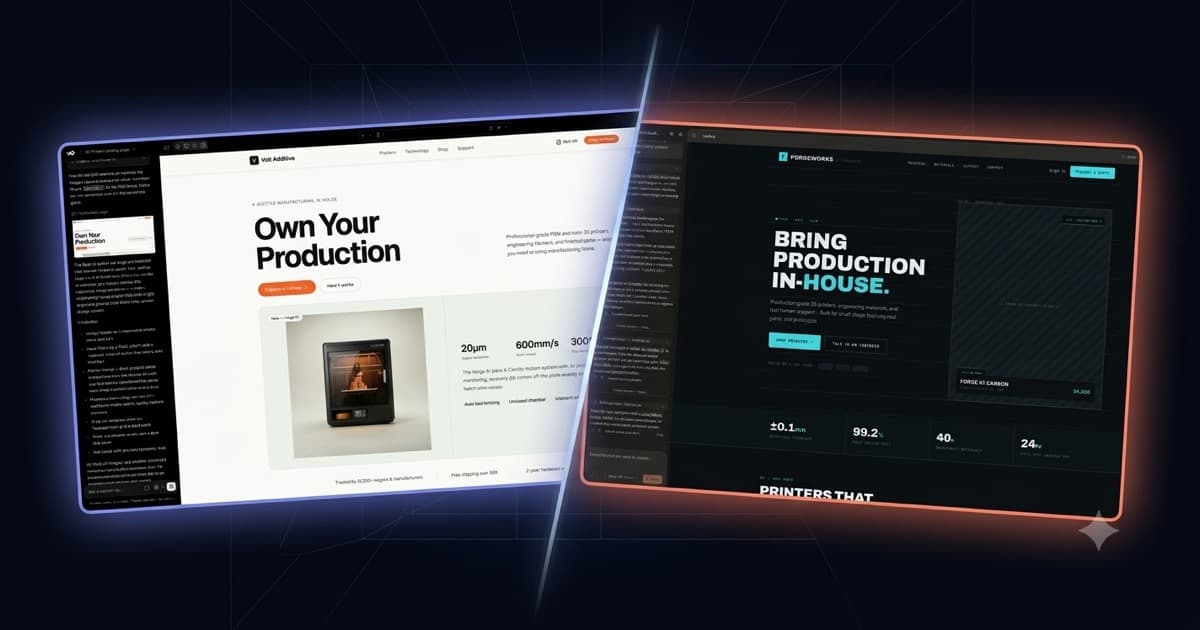
Claude Design vs. Stitch, v0, and Open UI: The Agent Isn't a Tool
Anthropic's Claude Design enters the AI UI race against Google Stitch, Vercel v0, and Open UI. Why an agent that designs through your codebase is a different category.
Back in March, we sorted the AI-generated UI race into two buckets: tools and infrastructure. Google Stitch and Vercel v0 were tools, competing to generate your screens. Open UI was infrastructure, quietly standardizing what those screens are made of. The frame held up well. Four months later, it's incomplete.
On April 17, Anthropic Labs launched Claude Design, and most coverage filed it as "Anthropic's Stitch competitor." That's the obvious reading, and it's wrong in an instructive way. Claude isn't entering the design race as another tool. It's entering as something the original taxonomy didn't have a slot for: a general agent that happens to design.
The Scoreboard: Stitch, v0, and Open UI Since March
The two buckets have been busy. Stitch got its biggest update yet at Google I/O on May 19: a real-time "Stitch Agent" that streams interfaces onto the canvas as you type or speak, voice input, mid-generation steering, and export paths to Google Antigravity or direct publishing through Netlify. It remains a Google Labs preview with monthly generation caps and a reputation for reliability hiccups.
Vercel repositioned v0 in February from prototyping toy to production builder: repository import, a git-first workflow that lets non-engineers open pull requests, and secured data connections. By its Ship event in June, Vercel was showing v0 embedded inside enterprise products at SAP and ZoomInfo rather than pitching it as a standalone destination.
And the infrastructure layer kept grinding forward. Open UI now lists five graduated proposals, including the Popover API and the customizable select element, and customizable select was accepted as a focus area for Interop 2026, the annual cross-browser compatibility push. It still only ships in stable Chromium browsers, but Mozilla and WebKit have both taken positive positions. Unglamorous, slow, foundational. Exactly as advertised.
Claude Design Is the Product. The Stack Is the Story.
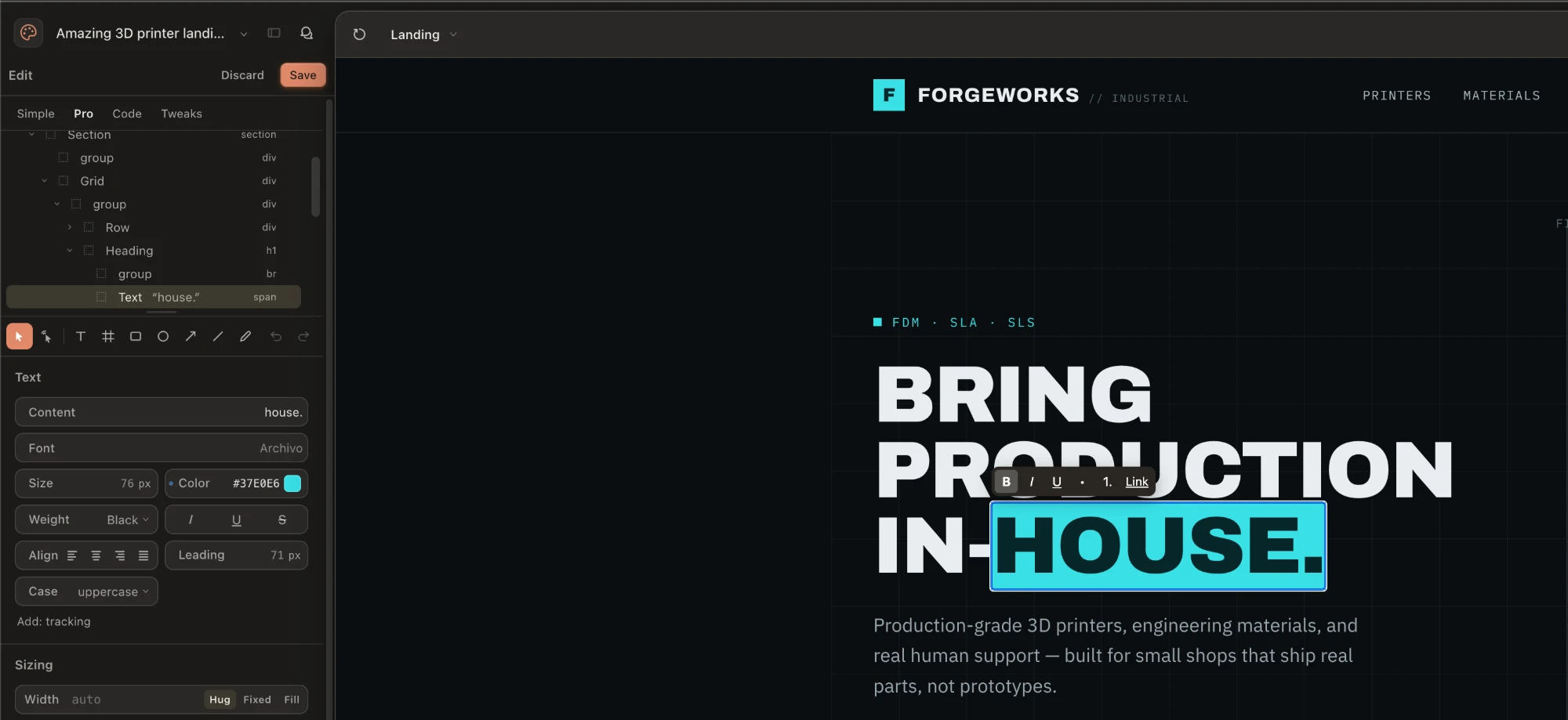
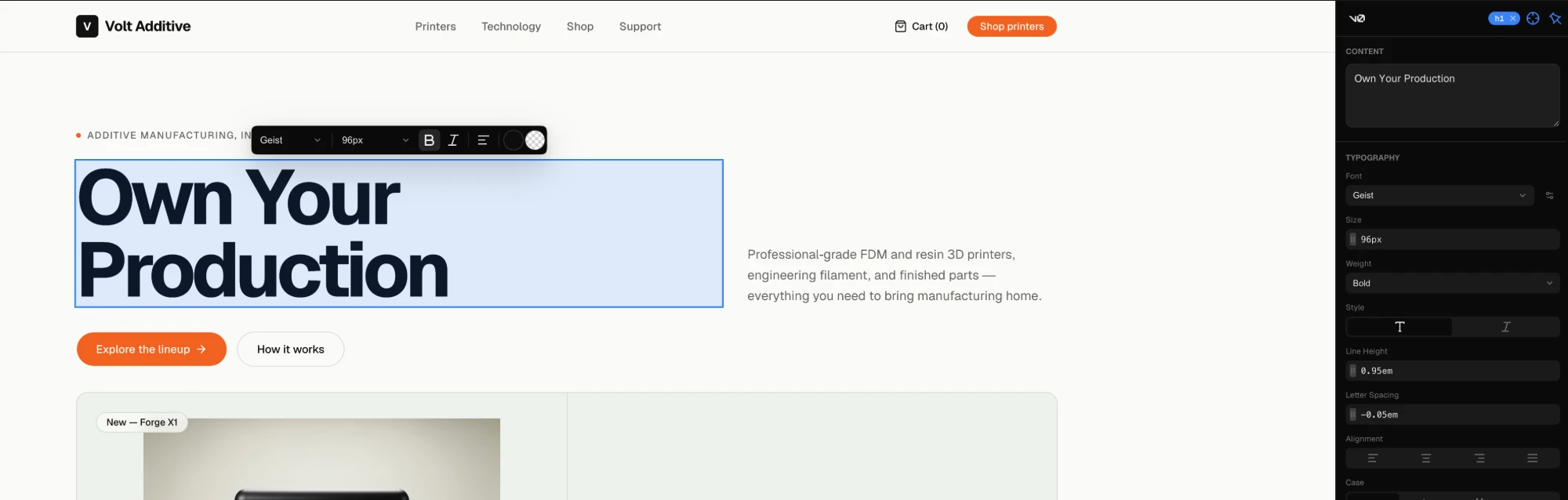
Claude Design is Anthropic Labs' design surface for Claude: a chat panel next to a live canvas that produces designs, interactive prototypes, slides, and marketing material. On the surface, that looks familiar. You describe intent, get a first version, then refine through conversation, comments pinned to specific elements, direct text edits, and auto-generated sliders for spacing, color, and layout. Prototypes are shared as links with view, comment, or edit permissions, so a team can user-test an interactive mockup without anyone reviewing code.
But the launch is better understood as the visible tip of a stack Anthropic has been assembling for two years. Claude Artifacts, the split-panel live preview that shipped in mid-2024, has produced more than half a billion artifacts by Anthropic's count. An official Frontend Design plugin for Claude Code, which is essentially a fifty-line instructions file, forces the model to commit to a deliberate aesthetic direction before writing code and explicitly steers it away from generic system fonts and cookie-cutter components. It has over a million installs. A Chrome integration lets Claude open the interface it just built in a real browser and visually verify it matches the mock. None of these are design tools. Together they add up to an agent that can design, build, look at its own work, and correct it.
The headline capability is the tell: Claude Design ingests your design system from your codebase or files, checks its own output against it, and self-corrects before showing you anything. A sync command keeps design systems aligned in both directions between Claude Code repositories and Claude Design. That's not a canvas feature. That's an agent treating your design system as ground truth.
Tools Compete for Your Workflow. Agents Dissolve It.
Here's the distinction worth being precise about, in the spirit of the original piece.
Stitch and v0 are destinations. You go to them, work inside their canvas or their editor, and export the result into your actual workflow. Their business depends on you staying: v0 is coupled to the React and Next.js ecosystem, Stitch to Google's. Open UI, at the other extreme, is a place nobody works at all. It's the shared vocabulary underneath everyone's work.
Claude sits in neither position. There is no "the" place where Claude designs. It designs in a chat window, in your repository through Claude Code, in a browser tab it's verifying, in a slide deck it's exporting. Usage isn't even metered separately: Claude Design draws from the same pool as Claude chat and Claude Code, which is a quiet but revealing product decision. Anthropic isn't selling a design tool. It's selling one agent with design as one of its competencies, pipelined directly into the same agent's coding competency, so development continues from the design rather than from a screenshot of it.
A four-way test published this spring, putting Claude Design against v0, Figma Make, and Stitch on the same task, landed on a conclusion that supports the frame: visual quality isn't what separates these products anymore. Workflow fit and how they handle your specifications is. Which is exactly what you'd expect once one of the contestants stopped being a workflow and started being a colleague.
The Figma Subplot Got Uncomfortable
The most interesting collateral story is Figma. Through the winter, Anthropic and Figma looked like model partners: in January, Figma's app in Claude started turning conversations, requirements documents, and screenshots into editable FigJam diagrams, and in February the "Code to Canvas" integration began reconstructing Claude-built interfaces inside Figma as native, editable layers and auto-layout groups rather than flat screenshots.
Then Anthropic's chief product officer Mike Krieger resigned from Figma's board on April 14. Claude Design launched three days later, and Figma's stock dropped on the news. To be fair to everyone involved, the reporting explicitly frames the connection between the board exit and the launch as suspicious timing rather than established fact. But the structural tension is real regardless of the gossip: when the agent that writes your production code also produces editable designs against your design system, the canvas in the middle has to argue for its seat.
What This Actually Changes for Designers
A few practical readings, keeping the usual skepticism intact.
Your design system is now an input, and its quality gates the output. Anthropic's own documentation says Claude Design's results depend directly on the quality of the design-system source files it's fed. The teams that treated tokens, component documentation, and naming as maintenance chores are about to discover they were writing the brief for their agent.
This is a frontend story, not a product story. Reviewers consistently note Claude Design produces no databases, no authentication, no server logic. The prototype-without-a-pull-request workflow is genuinely useful for user testing; it is not shipping.
It's early, and it shows. Anthropic's help center lists comment persistence issues, lag on large repositories, and unreliable simultaneous multi-person editing among current limitations. Treat it as a research preview because that's what it is.
The infrastructure argument got stronger, not weaker. This is where the March piece ages best. An agent that designs through your codebase benefits enormously from components that are well-defined, portable, and consistent across browsers. Every Open UI proposal that graduates gives agents better primitives to build toward and fewer ways to hallucinate structure. Agents don't make the spec layer obsolete. They make it load-bearing.
The Frame, Revised: Tools, Infrastructure, Agents
So the taxonomy now has three entries:
- Tools (Google Stitch, Vercel v0, Figma Make). Generate interfaces inside their own canvas and compete for your workflow.
- Infrastructure (Open UI). Standardizes what interfaces are made of, so every tool's output gets more portable.
- Agents (Claude). Absorb design as one capability among many, treating your design system as ground truth and your codebase as the medium.
Stitch and v0 are still racing to close the design-to-code gap. Open UI is still deciding what's on the other side of it. Claude is making a different bet: that the gap was never really between design and code, but between people and both.
Sources: Introducing Claude Design by Anthropic Labs, Get started with Claude Design, Frontend Design plugin, Turn ideas into interactive AI-powered apps, Think Outside of the Box with Claude and FigJam, How the Code to Canvas integration works, Anthropic faces tensions with Figma, Real-time design with Google Stitch, Introducing the new v0, Vercel Ship 2026 recap, I tested all four on the same task, Open UI